Free Planting Data

What Can Grow in Your Area?

Discover what vegetables, fruits, herbs, and flowers grow in your USDA hardiness zone, state, or city. Free planting guides for every US location.

Browse by State

StateAbbrPrimary ZoneTop CropsGrowing Season
Alabama AL 8a tomatoes, peppers, okra 220 days
Alaska AK 3b kale, cabbage, potatoes 80 days
Arizona AZ 9b tomatoes, peppers, lettuce 280 days
Arkansas AR 7a tomatoes, peppers, okra 190 days
California CA 9b tomatoes, artichokes, broccoli 280 days
Colorado CO 5b tomatoes, peppers, beans 130 days
Connecticut CT 6a tomatoes, peppers, beans 155 days
Delaware DE 7a tomatoes, peppers, cucumbers 175 days
Florida FL 9b tomatoes, peppers, sweet corn 320 days
Georgia GA 7b tomatoes, peppers, okra 210 days
Hawaii HI 12a sweet potatoes, taro, yardlong beans 365 days
Idaho ID 5b potatoes, onions, beans 140 days
Illinois IL 5b tomatoes, peppers, corn 150 days
Indiana IN 5b tomatoes, peppers, corn 155 days
Iowa IA 5a tomatoes, sweet corn, beans 145 days
Kansas KS 6a tomatoes, peppers, sweet corn 170 days
Kentucky KY 6b tomatoes, peppers, tobacco 175 days
Louisiana LA 8b tomatoes, peppers, okra 230 days
Maine ME 5a potatoes, kale, cabbage 125 days
Maryland MD 6b tomatoes, peppers, corn 175 days
Massachusetts MA 6a tomatoes, peppers, corn 155 days
Michigan MI 5b tomatoes, peppers, beans 150 days
Minnesota MN 4a kale, cabbage, potatoes 130 days
Mississippi MS 8a tomatoes, peppers, okra 220 days
Missouri MO 6a tomatoes, peppers, sweet corn 175 days
Montana MT 4b potatoes, root vegetables, brassicas 115 days
Nebraska NE 5b tomatoes, peppers, corn 155 days
Nevada NV 7a tomatoes, peppers, beans 160 days
New Hampshire NH 5b tomatoes, peppers, beans 140 days
New Jersey NJ 6b tomatoes, peppers, eggplant 170 days
New Mexico NM 7b tomatoes, chile peppers, beans 175 days
New York NY 5b tomatoes, peppers, corn 150 days
North Carolina NC 7a tomatoes, peppers, sweet potatoes 200 days
North Dakota ND 4a potatoes, sunflowers, beets 120 days
Ohio OH 5b tomatoes, peppers, corn 155 days
Oklahoma OK 7a tomatoes, peppers, okra 190 days
Oregon OR 8a tomatoes, broccoli, beans 180 days
Pennsylvania PA 5b tomatoes, peppers, corn 155 days
Rhode Island RI 6a tomatoes, peppers, squash 155 days
South Carolina SC 8a tomatoes, peppers, sweet potatoes 215 days
South Dakota SD 4b potatoes, corn, sunflowers 130 days
Tennessee TN 6b tomatoes, peppers, sweet corn 190 days
Texas TX 8a tomatoes, peppers, okra 220 days
Utah UT 6a tomatoes, peppers, beans 155 days
Vermont VT 4b potatoes, kale, cabbage 135 days
Virginia VA 6b tomatoes, peppers, sweet potatoes 185 days
Washington WA 7b apples, potatoes, hops 185 days
West Virginia WV 5b tomatoes, peppers, beans 155 days
Wisconsin WI 5a tomatoes, peppers, corn 145 days
Wyoming WY 4b potatoes, root vegetables, brassicas 115 days
🌱
Shop seeds matched to your zone Burpee, Park Seed, and more — curated for your growing conditions.
Shop Seeds →

Browse by Zone

Click any zone to see what plants, vegetables, and fruits grow there.

1a
Subarctic
1b
Subarctic
2a
Subarctic
2b
Subarctic
3a
Cold North
3b
Cold North
4a
Cold North
4b
Cold North
5a
Cool Temperate
5b
Cool Temperate
6a
Moderate
6b
Moderate
7a
Warm Temperate
7b
Warm Temperate
8a
Mild
8b
Mild
9a
Warm Mild
9b
Warm Mild
10a
Subtropical
10b
Subtropical
11a
Tropical
11b
Tropical
12a
Tropical
12b
Tropical
13a
Tropical
13b
Tropical

All States at a Glance

AL Alabama AK Alaska AZ Arizona AR Arkansas CA California CO Colorado CT Connecticut DE Delaware FL Florida GA Georgia HI Hawaii ID Idaho IL Illinois IN Indiana IA Iowa KS Kansas KY Kentucky LA Louisiana ME Maine MD Maryland MA Massachusetts MI Michigan MN Minnesota MS Mississippi MO Missouri MT Montana NE Nebraska NV Nevada NH New Hampshire NJ New Jersey NM New Mexico NY New York NC North Carolina ND North Dakota OH Ohio OK Oklahoma OR Oregon PA Pennsylvania RI Rhode Island SC South Carolina SD South Dakota TN Tennessee TX Texas UT Utah VT Vermont VA Virginia WA Washington WV West Virginia WI Wisconsin WY Wyoming

Frequently Asked Questions

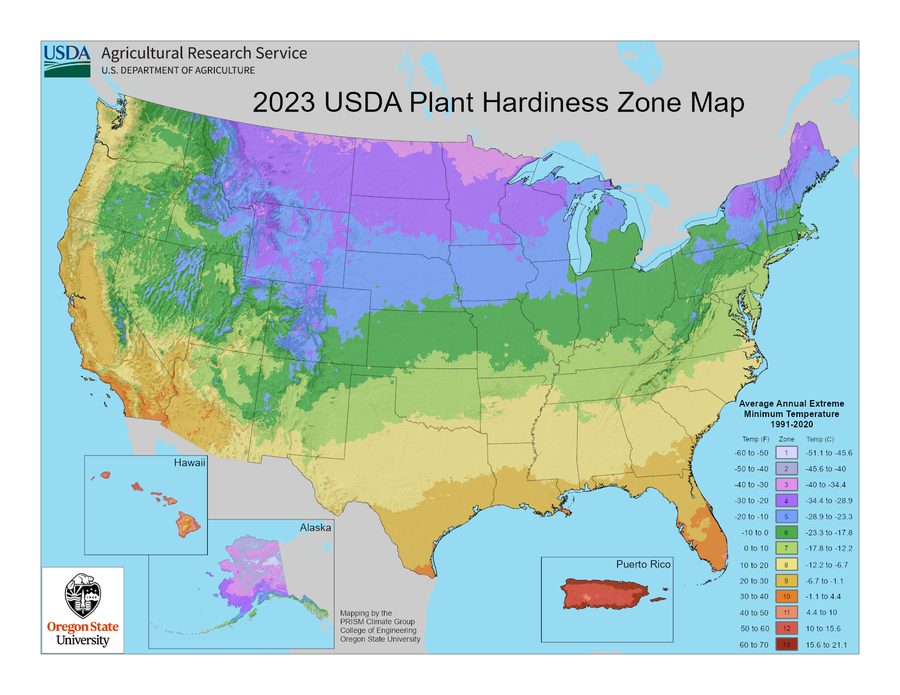
A USDA Plant Hardiness Zone is a standard used to indicate the minimum winter temperature in a geographic area. The US is divided into 26 zones from 1a (coldest, Alaska) to 13b (hottest, Hawaii and Puerto Rico). Knowing your zone helps you choose plants that will survive your winters.

You can find your USDA zone by looking up your zip code on the official USDA Plant Hardiness Zone Map at planthardiness.ars.usda.gov, or by browsing our state and city pages. Most US zip codes fall in zones 3 through 10.

Each USDA zone is split into an 'a' (colder) and 'b' (warmer) half. Zone 6a has minimum winter temps of -10°F to -5°F, while zone 6b ranges from -5°F to 0°F. The 'b' subzone is 5°F warmer than the 'a' subzone.

Yes! USDA zones mainly describe perennial plant hardiness. Annual vegetables like tomatoes and peppers don't need to survive winter — what matters is the length of your frost-free growing season. A zone 4 gardener can grow the same annual vegetables as a zone 8 gardener, just with a shorter window.

Tomatoes grow best in zones 5-9 where the frost-free growing season is long enough for them to mature. They need at least 90-120 frost-free days depending on variety. In colder zones (3-4), use transplants and choose early-maturing varieties. In warmer zones (9-11), grow them in spring and fall to avoid peak summer heat.