How to Grow Red Currant
Zones 3a–6b · Beginner · Perennial
Container-friendlyPerennial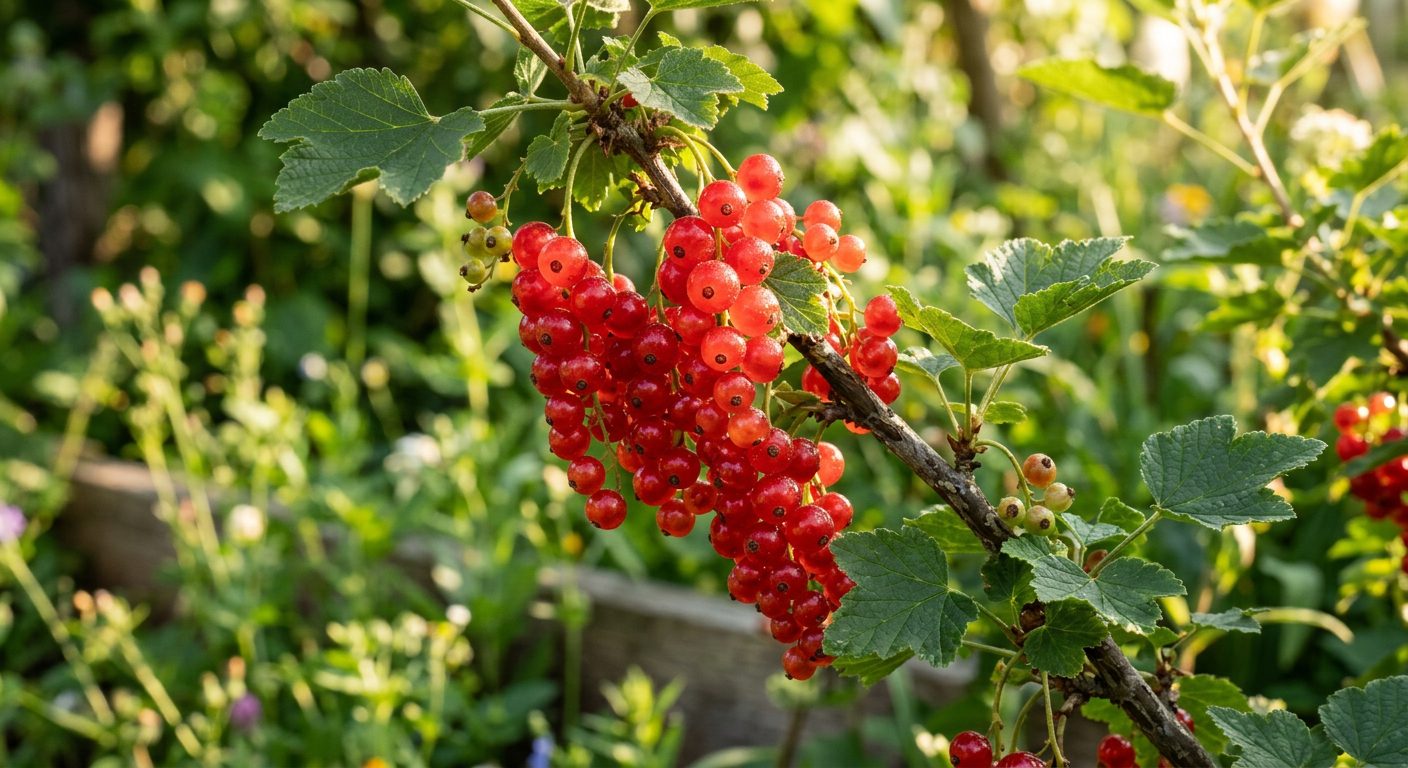
Red currants produce clusters of jewel-like berries in early summer — tart, high in pectin, and exceptional for jams, jellies, and juice. One of the most cold-hardy small fruits available.
Light
Water
Soil
Days to harvest
When to plant Red Currants
Your exact dates depend on your last frost date. Enter your location to get your personalized planting calendar.
In general: direct-sow or transplant after your last frost, and expect harvest starting the following season. See zone 3a →
Growing guide
Overview
Red currant is a cold-hardy, beginner-friendly perennial bush that produces clusters of tart, jewel-red berries in early to midsummer. Growers value it for jams, jellies, and juice, and because it thrives in cool climates where many other fruits struggle. It needs well-drained soil, moderate water, and a sunny to partly shaded spot with good air circulation.
Soil & planting prep
Red currants grow well in loamy or clay soil that drains well, ideally with a pH around 6.0–6.8. Work 2–3 inches of compost into the top 12 inches of soil before planting, and space bushes 3–4 feet apart. Avoid low spots where water collects, especially after snowmelt.
When to plant
Set out plants in early spring as soon as the ground can be worked, about 2–3 weeks before your average last frost date. Red currants tolerate frost, so early planting is safe for dormant plants. Do not plant in the heat of summer in the warmer end of their range.
How to plant
- Choose a site with full sun to partial shade and good air circulation; in the warmest part of the range, give afternoon shade.
- Work 2–3 inches of compost into the planting area, digging down about 12 inches to loosen heavy soil.
- Dig a hole wider and slightly deeper than the root ball, then set the plant so the crown sits about 2–3 inches below the surrounding soil line.
- Backfill with soil, firm gently with your hands, and water deeply to settle the roots.
- Prune all canes back to about 6 inches after planting to encourage strong new basal growth, and space additional plants 3–4 feet apart.
5 common mistakes to avoid
- Letting bushes become crowded with old wood: red currants fruit best on two- and three-year-old canes, so older canes produce little and block light. Prune out a few of the oldest stems at ground level each late winter and keep a mix of one-, two-, and three-year-old canes.
- Siting them in hot, all-day sun in the warm end of their range: red currants are cool-climate plants and can leaf-scorch or drop fruit under heat stress. In zone 6 and warmer, plant where they get morning sun and afternoon shade.
- Waiting to net until berries are fully red: birds often strip a bush clean just as the clusters begin to color. Cover bushes with bird netting as soon as berries start changing from green to pink.
- Overfeeding with nitrogen: too much nitrogen pushes soft leafy growth at the expense of berry clusters. Use a light spring top-dressing of compost or a balanced fertilizer instead of high-nitrogen lawn fertilizer.
- Planting in poorly drained soil: red currants tolerate clay but not waterlogged roots, which can lead to root rot. Improve drainage with compost and avoid low-lying areas where rain or snowmelt lingers.
Harvesting & storage
Red currants are ready when the entire cluster is uniformly bright red and has a slight translucent sheen; taste a few berries before picking, because they do not ripen much off the bush. Harvest whole clusters by cutting or gently pulling the stem, then strip the berries from the strig. Refrigerate unwashed fruit for up to a week, or freeze berries in a single layer before bagging.
Companion planting
Pollinator-friendly herbs such as chives and low-growing flowers like alyssum make good companions for red currants. Avoid aggressive spreaders like mint, which will compete with the bush’s shallow roots for moisture and nutrients.
Growing in containers
Red currants grow well in a 15-gallon container. Use a loamy potting mix with good drainage, place the pot in morning sun or dappled shade, and prune yearly to keep a manageable set of 8–10 fruiting canes; container-grown plants need more frequent watering and winter protection in zones 3–4.
Pro tips
Plant in a sheltered spot with good air circulation. Fruits on two and three-year-old wood — prune out older stems annually. Harvest full clusters in midsummer. Birds love them, so net the bush as they ripen.
Grow Red Currants this season
Get red currant seeds and supplies matched to your climate.
Shop red currant seeds →We may earn a commission when you buy through links on our site. Full disclosure.
Frequently asked questions
How long do Red Currants take to grow?
Red Currants take about Perennial.
What zone does Red Currant grow in?
Red Currants grow in USDA Hardiness Zones 3a–6b.
Can you grow Red Currant in a container?
Yes — Red Currants grow well in containers. A 15-gallon pot or larger is ideal.
Is Red Currant hard to grow?
Difficulty: Beginner. Red currants produce clusters of jewel-like berries in early summer — tart, high in pectin, and exceptional for jams, jellies, and juice. One of the most cold-hardy small fruits available.
Is Red Currant safe for dogs and cats?
Red Currants are safe for both dogs and cats.
Grows well with
Companion plants that help red currant — improving growth, repelling pests, or attracting pollinators.
More plants to grow
Popular guides readers also check.
🌱 Get red currant planting dates for your zone
Get your personalized "what to plant and when" calendar for your zone — plus tips when each crop is ready. Free, unsubscribe anytime.