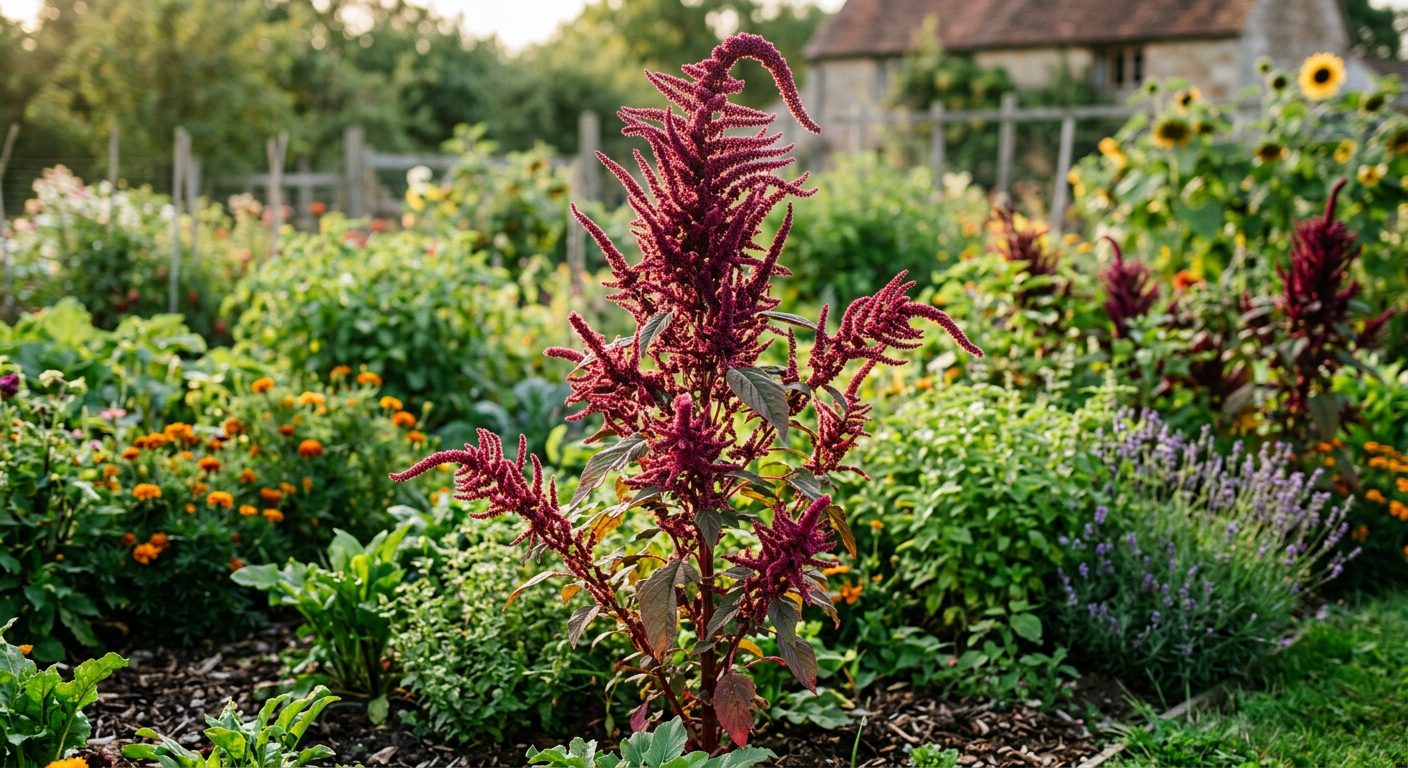
Growing Amaranth (Chaulai / Rajgira)
Amaranth (chaulai saag) is a fast-growing leafy vegetable and grain crop used across Indian, African, and Central American cuisines. The leaves are cooked like spinach; the seeds (rajgira) are a nutritious grain used in laddoos and rotis. Extremely productive and heat-tolerant.
Quick Answer: Amaranth (Chaulai / Rajgira) grows in Zones 4a–11b, taking 50–75 days to harvest.
It's one of the easiest crops to grow.
🌡️ Zones 4a–11b
☀️ Full Sun
💧 Low Water
🌱 Beginner Friendly
🪴 Container OK (5+ gal)
🏠 Indoor Viable
💦 Hydroponic
🏜️ Drought Tolerant
🐾 Pet Safe
Can You Grow Amaranth (Chaulai / Rajgira) in Your Area?
Growing Tips
Direct sow after last frost — grows rapidly in heat. Harvest outer leaves continuously for greens. For grain, let seed heads mature and turn brown, then thresh over a bucket. Leaf amaranth is ready in 6-8 weeks. Self-seeds prolifically — deadhead if you do not want volunteers.
Where Does Amaranth (Chaulai / Rajgira) Grow?
Amaranth (Chaulai / Rajgira) is suited to Zones 4a–11b. Here are some areas where it thrives:
✅ Zone 4a
✅ Zone 4b
✅ Zone 5a
✅ Zone 5b
✅ Zone 6a
✅ Zone 6b
✅ Zone 7a
✅ Zone 7b
✅ Zone 8a
✅ Zone 8b
✅ Zone 9a
✅ Zone 9b
Won't grow outdoors in:
Frequently Asked Questions
Amaranth (Chaulai / Rajgira) grows in USDA Zones 4a–11b.
Yes — Amaranth (Chaulai / Rajgira) is beginner-friendly.
Yes — use a 5+ gallon pot.
Amaranth (Chaulai / Rajgira) is safe for dogs and safe for cats.
Get zone-matched growing tips in your inbox
Free. No spam.
✅ You're in! Check your inbox.
Free. No spam. Unsubscribe any time.