Home › Plants › Taro (Arbi / Colocasia)
How to Grow Taro (Arbi / Colocasia)
Zones 7a–11b · Intermediate · 150–200 days
Container-friendlyBalcony/patioPerennial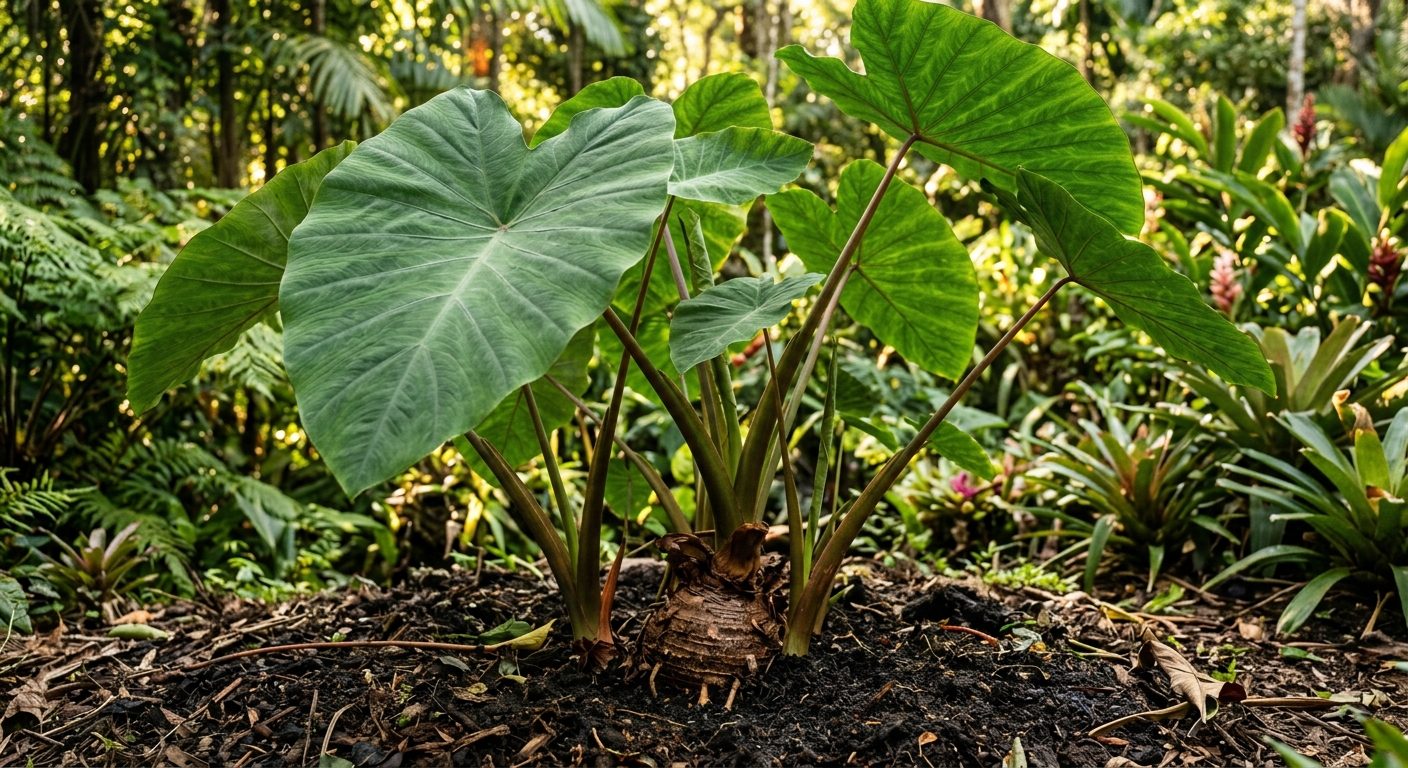
Taro (arbi) is a staple starchy corm used across Indian, Caribbean, Hawaiian, and African cuisines. The large decorative leaves make it a striking ornamental too. Grow from corms — never eat raw (the raw plant contains calcium oxalate crystals that must be destroyed by cooking).
Light
Water
Soil
Days to harvest
Start indoors
When to plant Taro (Arbi / Colocasia)s
Your exact dates depend on your last frost date. Enter your location to get your personalized planting calendar.
In general: start seeds indoors 8 weeks before your last frost, and expect harvest ~150–200 days later. See zone 7a →
Growing guide
Overview
Taro (Arbi / Colocasia) is a tropical root crop grown for its starchy corms and large, ornamental leaves. It thrives in warm, humid conditions with consistently moist soil and partial shade. It is a long-season crop, taking 150–200 days to harvest, and can be grown in the ground or in containers.
Soil & planting prep
Taro prefers loamy or clay soil that holds moisture, with a pH between 5.5 and 6.5. Work in plenty of organic matter such as compost or aged manure before planting. Space plants 2–3 feet apart in rows 3–4 feet apart, and plant corms 2–4 inches deep.
When to plant
Start taro corms indoors 8 weeks before your last frost date. Transplant outdoors only after the soil has warmed to at least 70°F and all danger of frost has passed. In zones 7a–11b, taro can be grown as a perennial in frost-free areas, but in cooler zones it is treated as an annual.
How to plant
- Choose a spot with partial shade and moist, well-drained soil rich in organic matter.
- Start corms indoors 8 weeks before last frost in pots filled with moist potting mix, keeping them warm (75–85°F).
- After last frost, harden off transplants and set them outdoors 2–3 feet apart, planting corms 2–4 inches deep.
- Water deeply and consistently to keep soil evenly moist, but not waterlogged.
- Mulch around plants to retain moisture and suppress weeds.
5 common mistakes to avoid
- Planting taro outdoors too early, before the soil has warmed, which stunts growth and can rot the corms; wait until after last frost and soil is at least 70°F.
- Letting the soil dry out completely, which causes small, tough corms; taro needs consistently moist soil, so water regularly and mulch.
- Harvesting too early, before the leaves yellow and die back, resulting in underdeveloped corms; wait 150–200 days from planting.
- Eating taro raw or undercooked, which causes severe irritation from calcium oxalate crystals; always cook thoroughly by boiling, baking, or frying.
- Growing in full sun in hot climates, which scorches the leaves and stresses the plant; provide partial shade, especially in afternoon.
Harvesting & storage
Taro is ready to harvest when the leaves turn yellow and begin to die back, typically 150–200 days after planting. Carefully dig up the corms with a fork, taking care not to bruise them. Store corms in a cool, dark, dry place for several weeks, or leave them in the ground in frost-free areas.
Companion planting
Good companions for taro include beans, peas, and other legumes that fix nitrogen, as well as brassicas like cabbage and broccoli. Avoid planting near tall, competitive plants that may shade it excessively.
Growing in containers
Taro can be grown in containers, using a pot at least 10 gallons in size. Keep the soil consistently moist and place the container in partial shade; bring it indoors before frost if you want to overwinter it.
Pro tips
Start corms indoors 8 weeks before last frost. Loves warmth, humidity, and consistently moist soil. Can grow in water or very wet soil. Harvest corms in fall when leaves yellow. Always cook thoroughly before eating. Can overwinter indoors as a houseplant.
Grow Taro (Arbi / Colocasia)s this season
Get taro (arbi / colocasia) seeds and supplies matched to your climate.
Shop taro (arbi / colocasia) seeds →We may earn a commission when you buy through links on our site. Full disclosure.
Frequently asked questions
How long do Taro (Arbi / Colocasia)s take to grow?
Taro (Arbi / Colocasia)s take about 150–200 days, plus 8 weeks to start seeds indoors.
What zone does Taro (Arbi / Colocasia) grow in?
Taro (Arbi / Colocasia)s grow in USDA Hardiness Zones 7a–11b.
Can you grow Taro (Arbi / Colocasia) in a container?
Yes — Taro (Arbi / Colocasia)s grow well in containers. A 10-gallon pot or larger is ideal.
Is Taro (Arbi / Colocasia) hard to grow?
Difficulty: Intermediate. Taro (arbi) is a staple starchy corm used across Indian, Caribbean, Hawaiian, and African cuisines. The large decorative leaves make it a striking ornamental too. Grow from corms — never eat raw (the raw plant contains calcium oxalate crystals that must be destroyed by cooking).
Is Taro (Arbi / Colocasia) safe for dogs and cats?
Taro (Arbi / Colocasia)s are not safe for pets — keep dogs and cats away from the plant.
More plants to grow
Popular guides readers also check.

🌱 Get taro (arbi / colocasia) planting dates for your zone
Get your personalized "what to plant and when" calendar for your zone — plus tips when each crop is ready. Free, unsubscribe anytime.