How to Grow Persimmon
Zones 7a–10b · Beginner · Perennial
Container-friendlyPerennial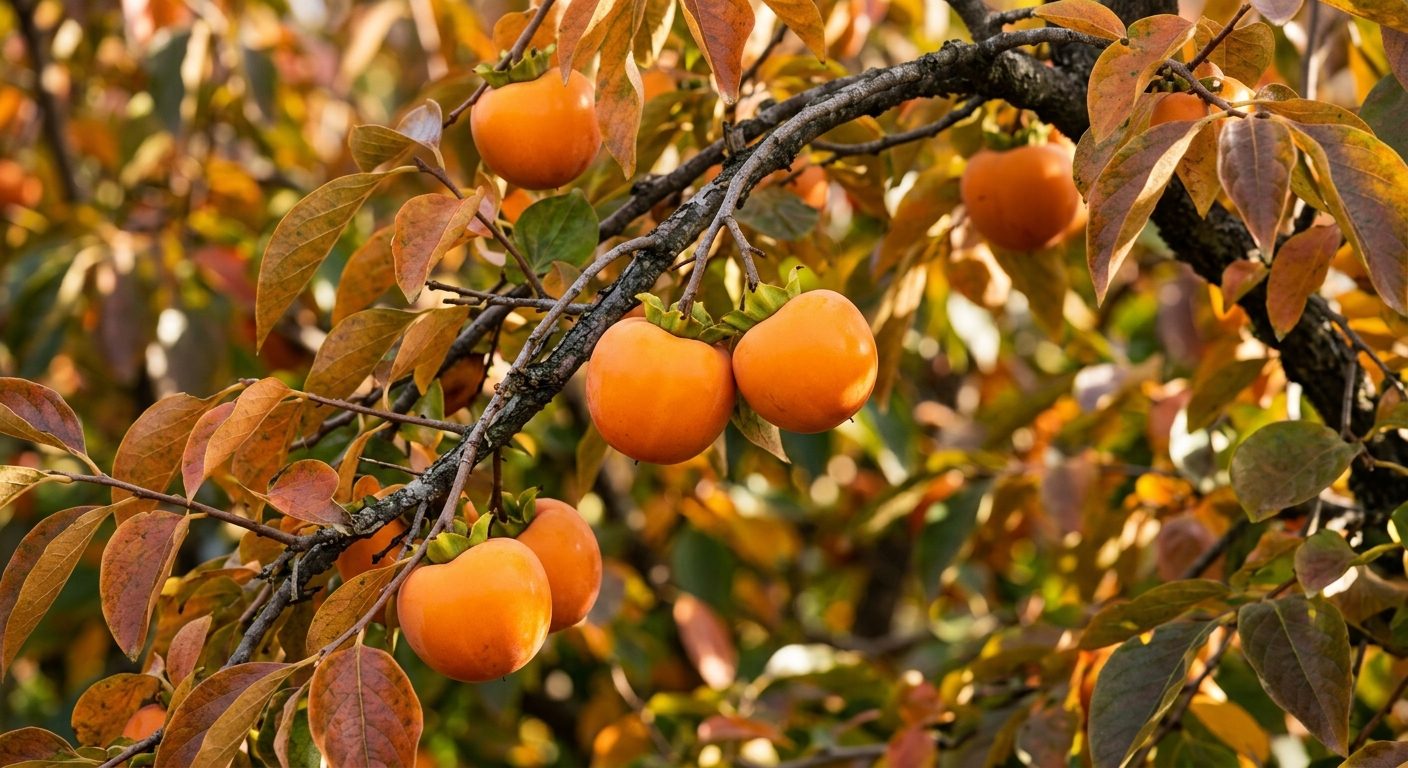
Asian persimmon produces stunning orange fruit in fall when little else is bearing. Sweet, non-astringent varieties like Fuyu can be eaten crisp like an apple. One of the lowest-maintenance fruit trees available.
Light
Water
Soil
Days to harvest
When to plant Persimmons
Your exact dates depend on your last frost date. Enter your location to get your personalized planting calendar.
In general: direct-sow or transplant after your last frost, and expect harvest starting the following season. See zone 7a →
Growing guide
Overview
Persimmon is a low-maintenance fruit tree that ripens bright orange fruit in fall when almost nothing else is bearing. Asian types like Fuyu (non-astringent, eaten crisp) and Hachiya (astringent, eaten soft-ripe) are the most common backyard choices. It needs full sun, well-drained soil, and only occasional water once established.
Soil & planting prep
Plant in loamy or sandy soil that drains well; persimmons tolerate a range of soils but rot in wet, heavy clay. A slightly acid to neutral pH (6.0–7.0) is ideal. Space standard trees 15–20 feet apart and grafted dwarf types 8–10 feet apart, planting at the same depth the tree grew in its nursery pot.
When to plant
Plant dormant bare-root or container trees in early spring, after the last frost date for your area, once the soil has warmed and is workable. In zones 7a–10b, aim for 2–4 weeks after your average last frost. Persimmons are not fall-planted and are frost-tender when young, so avoid planting until all danger of frost has passed.
How to plant
- Choose a site in full sun with well-drained soil, at least 8–10 feet from other trees or structures for dwarf types (15–20 feet for standard).
- Dig a hole twice as wide as the root ball and the same depth, so the graft union sits 2–3 inches above the soil line.
- Set the tree in the hole, backfill with native soil, and firm gently to remove air pockets — do not amend with heavy compost unless your soil is very poor.
- Water thoroughly at planting, then apply a 2–3 inch layer of mulch around the trunk, keeping mulch 2 inches away from the bark.
- Stake the tree if it is top-heavy or in a windy spot, and water weekly for the first growing season until roots establish.
5 common mistakes to avoid
- Planting too early in spring before the last frost — young persimmon wood is frost-tender and can die back; wait until the soil has warmed and all frost danger has passed.
- Choosing an astringent variety like Hachiya and eating the fruit firm — it will be mouth-puckeringly bitter; either grow a non-astringent Fuyu or wait until Hachiya fruit is fully soft and jelly-like.
- Overwatering or planting in a spot that stays wet — persimmons are drought-tolerant once established and are far more likely to die from soggy roots than from dry soil.
- Fertilizing heavily with nitrogen — this pushes leafy growth at the expense of fruit and can delay bearing; a light application in early spring is plenty for a young tree.
- Expecting fruit in the first year or two — grafted trees typically bear in years 3–5, so don’t dig up or replace a healthy tree just because it hasn’t fruited yet.
Harvesting & storage
For non-astringent Fuyu, harvest when the fruit is firm-ripe and fully colored orange — it can be eaten crisp like an apple. For astringent types like Hachiya, wait until the fruit is completely soft and the skin turns translucent, or harvest after the first light frost and let it ripen indoors. Store firm fruit at room temperature to soften, or refrigerate ripe fruit for up to a week.
Companion planting
Persimmons grow well near other low-water fruit trees like figs and pomegranates, and clover or vetch ground covers can be grown between rows to improve soil. Avoid planting right next to black walnut, which releases juglone that can stunt persimmon growth.
Growing in containers
Persimmons can be grown in a container, but they need a large one — use a 25-gallon pot at minimum for a dwarf or grafted variety. Use a well-drained potting mix, water when the top inch of soil dries, and expect the tree to stay smaller and bear less fruit than one in the ground.
Pro tips
Buy a grafted Fuyu (non-astringent) or Hachiya (astringent — must ripen fully). No spray needed. Drought-tolerant once established. Fruit in years 3-5. Harvest after first frost for astringent varieties, or when firm-ripe for Fuyu.
Grow Persimmons this season
Get persimmon seeds and supplies matched to your climate.
Shop persimmon seeds →We may earn a commission when you buy through links on our site. Full disclosure.
Frequently asked questions
How long do Persimmons take to grow?
Persimmons take about Perennial.
What zone does Persimmon grow in?
Persimmons grow in USDA Hardiness Zones 7a–10b.
Can you grow Persimmon in a container?
Yes — Persimmons grow well in containers. A 25-gallon pot or larger is ideal.
Is Persimmon hard to grow?
Difficulty: Beginner. Asian persimmon produces stunning orange fruit in fall when little else is bearing. Sweet, non-astringent varieties like Fuyu can be eaten crisp like an apple. One of the lowest-maintenance fruit trees available.
Is Persimmon safe for dogs and cats?
Persimmons are safe for both dogs and cats.
Grows well with
Companion plants that help persimmon — improving growth, repelling pests, or attracting pollinators.
More plants to grow
Popular guides readers also check.
🌱 Get persimmon planting dates for your zone
Get your personalized "what to plant and when" calendar for your zone — plus tips when each crop is ready. Free, unsubscribe anytime.