How to Grow Pawpaw
Zones 5a–8b · Intermediate · Perennial
PerennialDeer-resistant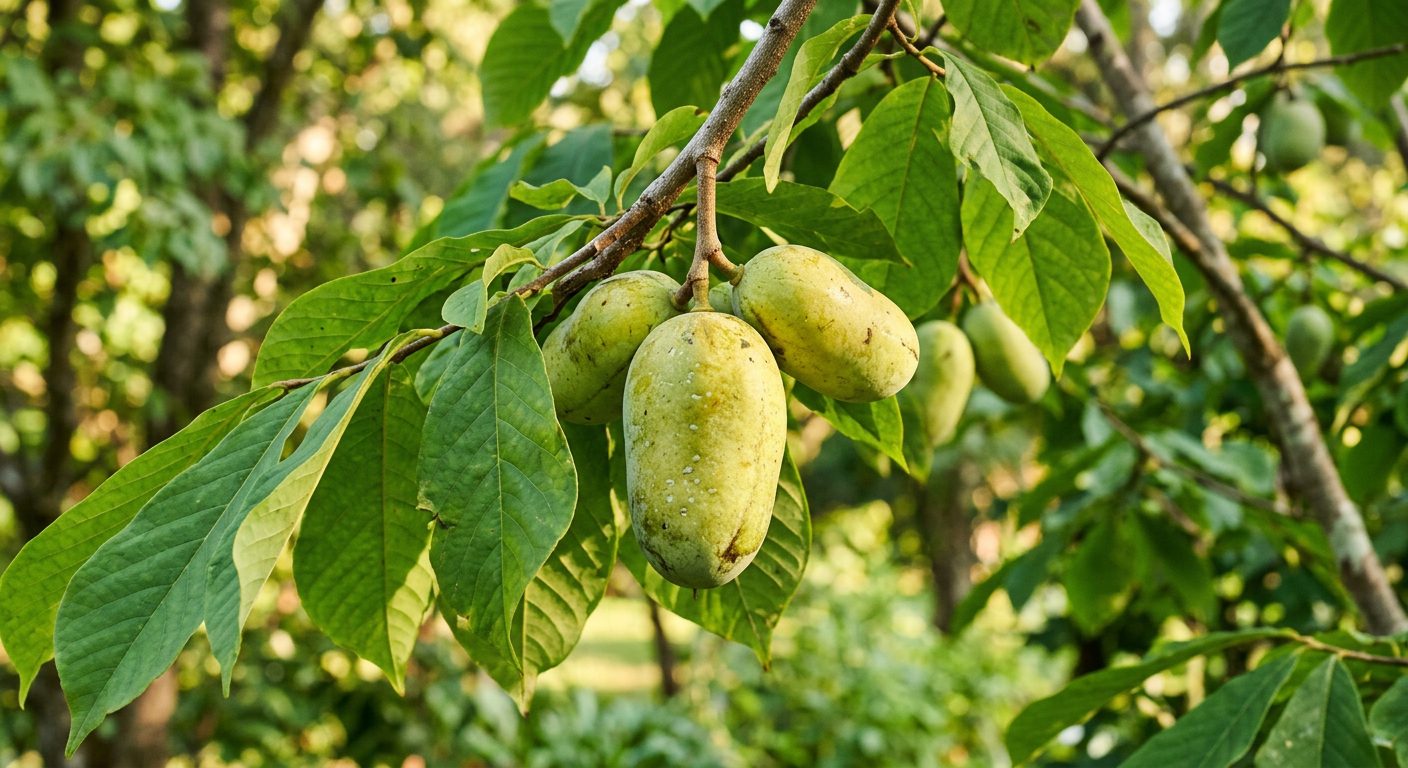
The pawpaw is North America's largest native fruit — tropical-tasting with a custard-like texture reminiscent of banana and mango. Deer-resistant and suited to cold climates. Fruits appear on 5-8 year old trees.
Light
Water
Soil
Days to harvest
When to plant Pawpaws
Your exact dates depend on your last frost date. Enter your location to get your personalized planting calendar.
In general: direct-sow or transplant after your last frost, and expect harvest starting the following season. See zone 5a →
Growing guide
Overview
The pawpaw is North America’s largest native fruit, with custard-like flesh that tastes like banana and mango. Growers love it because it’s deer-resistant, cold-hardy, and produces tropical-tasting fruit in zones 5a–8b. It needs moist, well-drained, rich soil; partial shade when young, then full sun; and patience — trees take 5–8 years to fruit.
Soil & planting prep
Choose a loamy, well-drained, rich soil with a pH around 5.5–7.0. Work in compost or aged manure before planting. Space trees 8–10 feet apart; plant at the same depth they grew in the nursery, with the root flare at soil level.
When to plant
Plant pawpaws in early spring, after the last frost date, when soil has warmed but is still moist. In zones 5a–8b, aim for 2–4 weeks after your average last frost. Avoid fall planting — young trees need a full season to establish before winter.
How to plant
- Soak bare-root or container trees in water for 1–2 hours before planting.
- Dig a hole twice as wide as the root ball and just as deep.
- Set the tree so the root flare sits at or slightly above soil level; backfill with native soil.
- Water thoroughly to settle soil, then apply a 2–3 inch layer of mulch, keeping it 2 inches away from the trunk.
- Plant two different seedlings within 15–20 feet for cross-pollination.
5 common mistakes to avoid
- Planting only one pawpaw — most varieties need a genetically different partner for pollination, so you get flowers but no fruit. Always plant two different seedlings or grafted cultivars within 20 feet.
- Letting the soil dry out completely — pawpaws have shallow, fleshy roots that stress easily. Keep the root zone evenly moist, especially the first two years, with mulch and regular watering.
- Exposing young trees to full sun right away — seedlings and young grafts can scorch. Give them partial shade (like a shade cloth or afternoon shade) for the first 2–3 years, then full sun.
- Damaging the taproot during transplant — pawpaws resent root disturbance. Handle the root ball gently, never bare-root a container tree, and plant immediately.
- Expecting fruit too soon — seed-grown trees take 5–8 years to bear. If you want faster results, buy a grafted named cultivar, which may fruit in 3–5 years.
Harvesting & storage
Pawpaws are ready when the fruit softens, turns yellowish-green to brown, and pulls easily from the branch — usually late summer to early fall. Pick by hand and eat fresh, or store ripe fruit in the refrigerator for up to a week; for longer storage, scoop the pulp and freeze it.
Companion planting
Good companions include nitrogen-fixing plants like clover or beans, and shade-providing trees when young. Avoid planting near black walnut, which releases juglone that can harm pawpaws.
Growing in containers
Pawpaws are not suited to containers — they have a deep taproot and need the space of in-ground planting to thrive. Grow them in the ground for best results.
Pro tips
Plant two different seedlings for pollination. Prefers partial shade when young, full sun when mature. Needs moist, well-drained soil. Slow to establish but long-lived. Protect flowers from late frost — a covered frame helps the first few springs.
Grow Pawpaws this season
Get pawpaw seeds and supplies matched to your climate.
Shop pawpaw seeds →We may earn a commission when you buy through links on our site. Full disclosure.
Frequently asked questions
How long do Pawpaws take to grow?
Pawpaws take about Perennial.
What zone does Pawpaw grow in?
Pawpaws grow in USDA Hardiness Zones 5a–8b.
Can you grow Pawpaw in a container?
Pawpaws are usually grown in the ground or a large raised bed rather than a container.
Is Pawpaw hard to grow?
Difficulty: Intermediate. The pawpaw is North America's largest native fruit — tropical-tasting with a custard-like texture reminiscent of banana and mango. Deer-resistant and suited to cold climates. Fruits appear on 5-8 year old trees.
Is Pawpaw safe for dogs and cats?
Pawpaws are safe for both dogs and cats.
More plants to grow
Popular guides readers also check.
🌱 Get pawpaw planting dates for your zone
Get your personalized "what to plant and when" calendar for your zone — plus tips when each crop is ready. Free, unsubscribe anytime.