Home › Plants › Curry Leaf Tree (Kadi Patta)
How to Grow Curry Leaf Tree (Kadi Patta)
Zones 9b–11b · Intermediate · 180–360 days
Container-friendlyBalcony/patioIndoor-friendlyPerennialDeer-resistant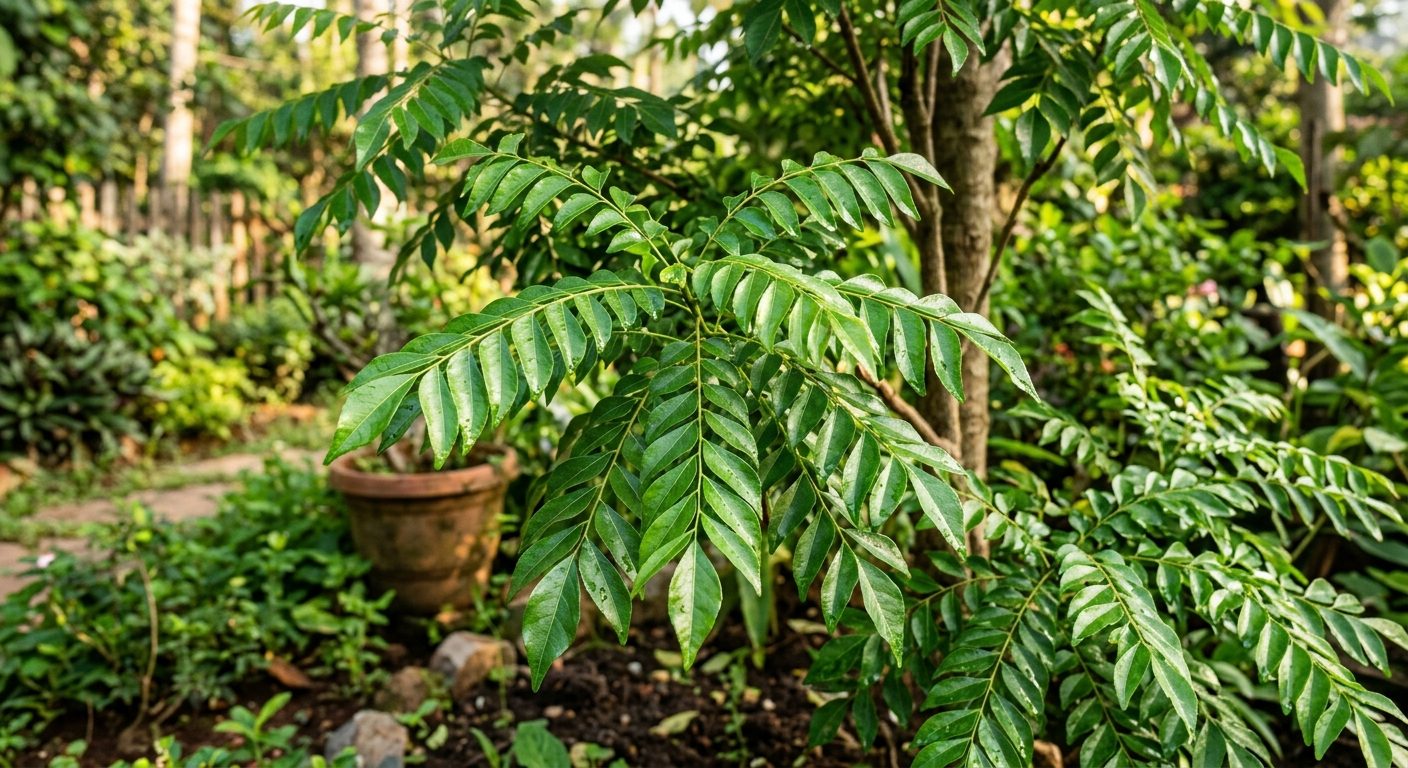
The curry leaf tree (Murraya koenigii) is the source of fresh kadi patta — the aromatic leaves irreplaceable in South Indian cooking. Fresh leaves bear no resemblance to dried. Grows beautifully as a container plant, overwintering indoors in cold climates.
Light
Water
Soil
Days to harvest
When to plant Curry Leaf Tree (Kadi Patta)s
Your exact dates depend on your last frost date. Enter your location to get your personalized planting calendar.
In general: direct-sow or transplant after your last frost, and expect harvest ~180–360 days later. See zone 9b →
Growing guide
Overview
The curry leaf tree (Murraya koenigii) is a small tropical evergreen grown for its glossy, aromatic leaflets — kadi patta — which are essential fresh in South Indian cooking and lose nearly all their character when dried. Gardeners love it because a single 10-gallon container plant can supply leaves for years, and the fragrance alone is worth the space. It needs full sun, moderate but steady water, and warm temperatures year-round; it is hardy only in zones 9b–11b and must come indoors before frost everywhere else.
Soil & planting prep
Use a loose, well-drained mix — a loamy or sandy potting blend with extra perlite or coarse sand works well, and a slightly acidic to neutral pH around 6.0–7.0 suits it. In the ground, plant where water never pools and amend heavy clay with compost and grit. Space plants about 6–8 feet apart in the ground, or one plant per 10-gallon container; set the root ball at the same depth it grew at the nursery, with the top of the root ball level with the soil surface.
When to plant
This is a warm-season tropical that is not frost-tolerant, so plant or move it outdoors only after your last frost date, once nights stay reliably above 50°F. In zones 9b–11b, that usually means late spring; in cooler zones, keep it in a 10-gallon container and set it outside for the summer, bringing it back in well before the first fall frost. There is no indoor seed-starting window to plan around — buy a small nursery plant instead, because seed-grown trees are extremely slow.
How to plant
- Choose a spot in full sun with well-drained soil, or a 10-gallon container with drainage holes.
- Fill the container or planting hole with a loamy, sandy, well-drained mix; if planting in the ground, dig a hole twice as wide as the root ball and no deeper.
- Set the plant so the top of the root ball sits level with the surrounding soil, then backfill gently and firm it in.
- Water deeply until water runs from the drainage holes (or until the ground is saturated), then let the soil settle.
- Keep the plant warm and sheltered for the first week; move containers outdoors only after the last frost date and once nights are above 50°F.
5 common mistakes to avoid
- Growing it from seed — curry leaf seeds lose viability fast and seedlings take years to reach harvest size, so buy a small plant from an Indian grocery or specialty nursery instead.
- Letting it sit in soggy soil — the tree is prone to root rot in heavy, waterlogged mixes, so always use a well-drained loamy or sandy blend and never let the pot stand in water.
- Leaving it outdoors when temperatures approach freezing — this tropical tree is not frost-tolerant and will be killed or badly defoliated, so bring containers indoors before temperatures drop below 32°F.
- Stripping whole stems when harvesting — pulling entire branches sets the plant back badly; pick individual leaflets instead and never strip a whole stem at once.
- Giving it too little sun indoors — a curry leaf tree in a dim corner grows leggy and drops leaves, so overwinter it in the brightest window you have or under a grow light.
Harvesting & storage
Leaves are ready to pick once the plant is established and has enough foliage to spare — usually several months to a year after planting, since the plant matures over 180–360 days. Snip individual leaflets from the stems with scissors or your fingers, taking only what you need and leaving the growing tips intact. Use them fresh the same day; they lose their aroma quickly and do not dry or freeze well.
Companion planting
In warm climates it grows well near other tropical container plants such as lemongrass and turmeric that share its sun and water needs. Avoid planting it in heavy shade or in low, wet spots where root rot is likely.
Growing in containers
It is an excellent container plant and one tree will thrive in a 10-gallon pot with drainage, which makes it easy to move indoors before frost in cold climates. On a balcony or patio, give it the sunniest spot and water deeply but let the mix dry between waterings.
Pro tips
Buy a small plant from an Indian grocery or specialty nursery — growing from seed is very slow. Pot in well-drained mix, full sun. Bring indoors before temperatures drop below 32°F. Water deeply but allow to dry between waterings. Harvest individual leaflets — never strip the whole stem at once.
Grow Curry Leaf Tree (Kadi Patta)s this season
Get curry leaf tree (kadi patta) seeds and supplies matched to your climate.
Shop curry leaf tree (kadi patta) seeds →We may earn a commission when you buy through links on our site. Full disclosure.
Frequently asked questions
How long do Curry Leaf Tree (Kadi Patta)s take to grow?
Curry Leaf Tree (Kadi Patta)s take about 180–360 days.
What zone does Curry Leaf Tree (Kadi Patta) grow in?
Curry Leaf Tree (Kadi Patta)s grow in USDA Hardiness Zones 9b–11b.
Can you grow Curry Leaf Tree (Kadi Patta) in a container?
Yes — Curry Leaf Tree (Kadi Patta)s grow well in containers. A 10-gallon pot or larger is ideal.
Is Curry Leaf Tree (Kadi Patta) hard to grow?
Difficulty: Intermediate. The curry leaf tree (Murraya koenigii) is the source of fresh kadi patta — the aromatic leaves irreplaceable in South Indian cooking. Fresh leaves bear no resemblance to dried. Grows beautifully as a container plant, overwintering indoors in cold climates.
Is Curry Leaf Tree (Kadi Patta) safe for dogs and cats?
Curry Leaf Tree (Kadi Patta)s are safe for both dogs and cats.
Grows well with
Companion plants that help curry leaf tree (kadi patta) — improving growth, repelling pests, or attracting pollinators.
More plants to grow
Popular guides readers also check.
🌱 Get curry leaf tree (kadi patta) planting dates for your zone
Get your personalized "what to plant and when" calendar for your zone — plus tips when each crop is ready. Free, unsubscribe anytime.