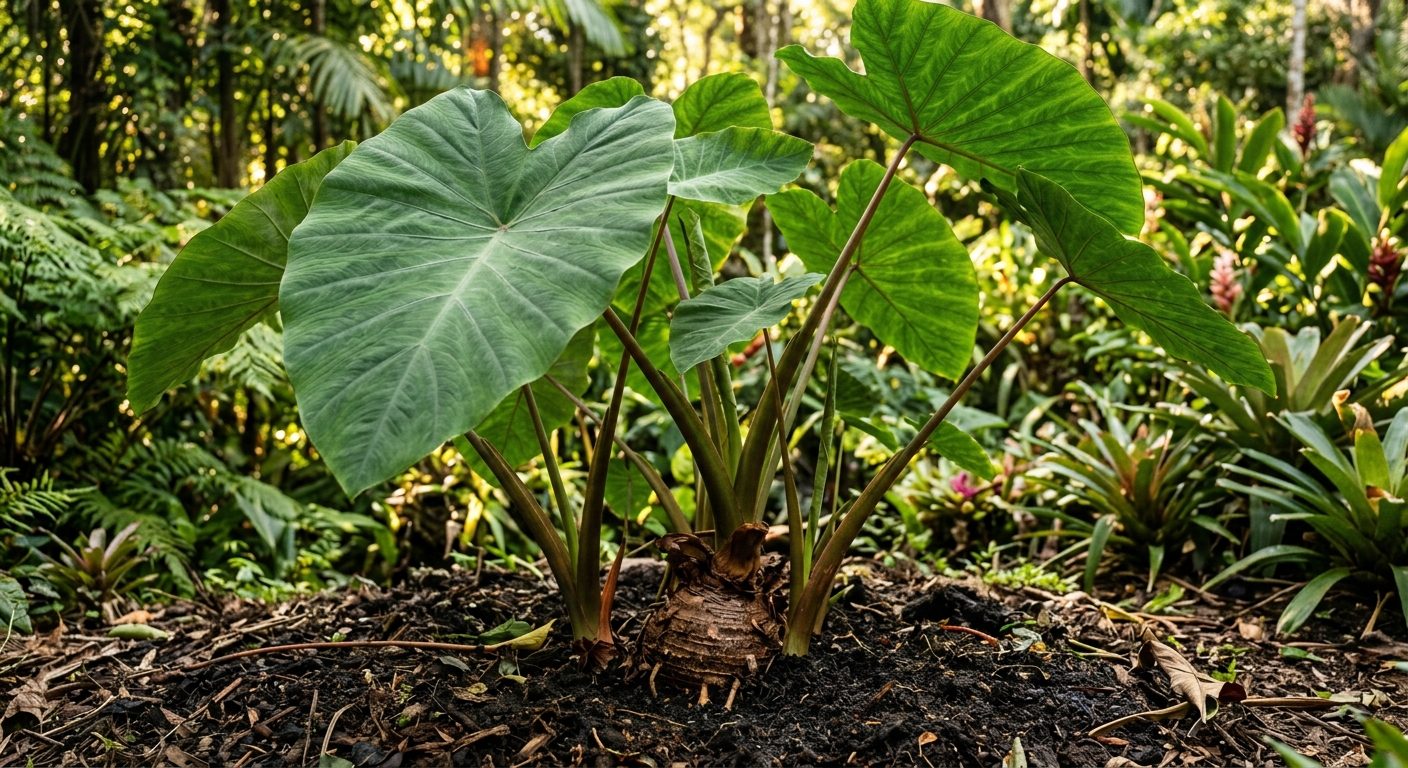
Growing Taro (Arbi / Colocasia)
Taro (arbi) is a staple starchy corm used across Indian, Caribbean, Hawaiian, and African cuisines. The large decorative leaves make it a striking ornamental too. Grow from corms — never eat raw (the raw plant contains calcium oxalate crystals that must be destroyed by cooking).
Quick Answer: Taro (Arbi / Colocasia) grows in Zones 7a–11b, taking 150–200 days to harvest.
🌡️ Zones 7a–11b
🌤️ Partial Shade
💧 High Water
🔧 Intermediate
🪴 Container OK (10+ gal)
🏠 Indoor Viable
♾️ Perennial
⚠️ Toxic to Pets
Can You Grow Taro (Arbi / Colocasia) in Your Area?
Growing Tips
Start corms indoors 8 weeks before last frost. Loves warmth, humidity, and consistently moist soil. Can grow in water or very wet soil. Harvest corms in fall when leaves yellow. Always cook thoroughly before eating. Can overwinter indoors as a houseplant.
Where Does Taro (Arbi / Colocasia) Grow?
Taro (Arbi / Colocasia) is suited to Zones 7a–11b. Here are some areas where it thrives:
Frequently Asked Questions
Taro (Arbi / Colocasia) grows in USDA Zones 7a–11b.
Taro (Arbi / Colocasia) needs moderate care.
Yes — use a 10+ gallon pot.
Taro (Arbi / Colocasia) is TOXIC for dogs and TOXIC for cats.
Get zone-matched growing tips in your inbox
Free. No spam.
✅ You're in! Check your inbox.
Free. No spam. Unsubscribe any time.