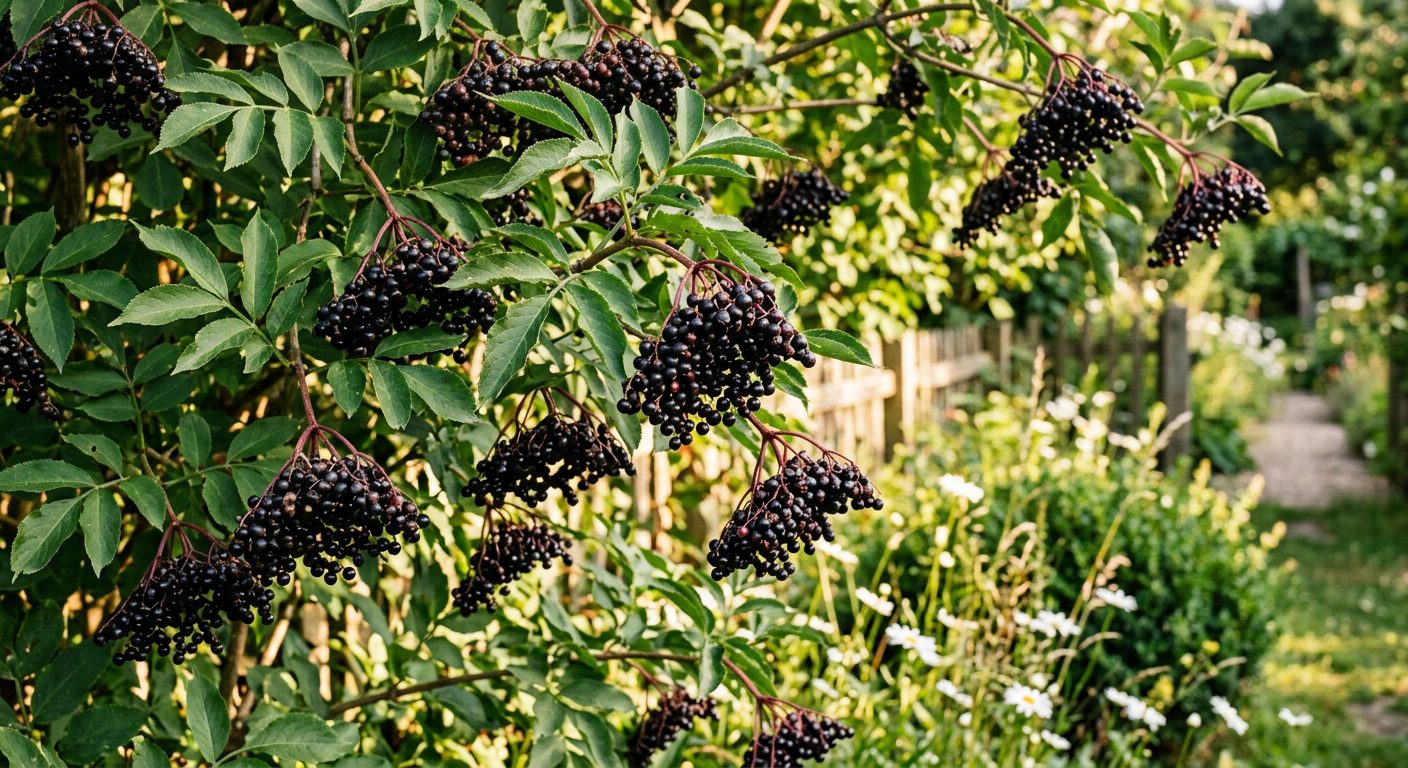
Growing Elderberry
Elderberries are a fast-growing native shrub producing massive clusters of dark berries used for immune-boosting syrup, wine, and jam. Caution: raw berries and all other plant parts are toxic — always cook before consuming.
Quick Answer: Elderberry grows in Zones 3a–9b.
It's one of the easiest crops to grow.
🌡️ Zones 3a–9b
🌥️ Full Shade
💧 High Water
🌱 Beginner Friendly
❄️ Frost Tolerant
♾️ Perennial
⚠️ Toxic to Pets
Can You Grow Elderberry in Your Area?
Growing Tips
Plant two different varieties for cross-pollination (Adams and Nova are popular pairs). Grows fast — 6-12 feet in two years. Tolerates wet soil better than most shrubs. Cut back hard in early spring. Cook all berries before eating.
Where Does Elderberry Grow?
Elderberry is suited to Zones 3a–9b. Here are some areas where it thrives:
✅ Zone 3a
✅ Zone 3b
✅ Zone 4a
✅ Zone 4b
✅ Zone 5a
✅ Zone 5b
✅ Zone 6a
✅ Zone 6b
✅ Zone 7a
✅ Zone 7b
✅ Zone 8a
✅ Zone 8b
Won't grow outdoors in:
Frequently Asked Questions
Elderberry grows in USDA Zones 3a–9b.
Yes — Elderberry is beginner-friendly.
Not well suited to containers.
Elderberry is TOXIC for dogs and TOXIC for cats.
Get zone-matched growing tips in your inbox
Free. No spam.
✅ You're in! Check your inbox.
Free. No spam. Unsubscribe any time.